Open to the Moment: How Emotional Honesty Unlocks the Deepest Companionship Experiences
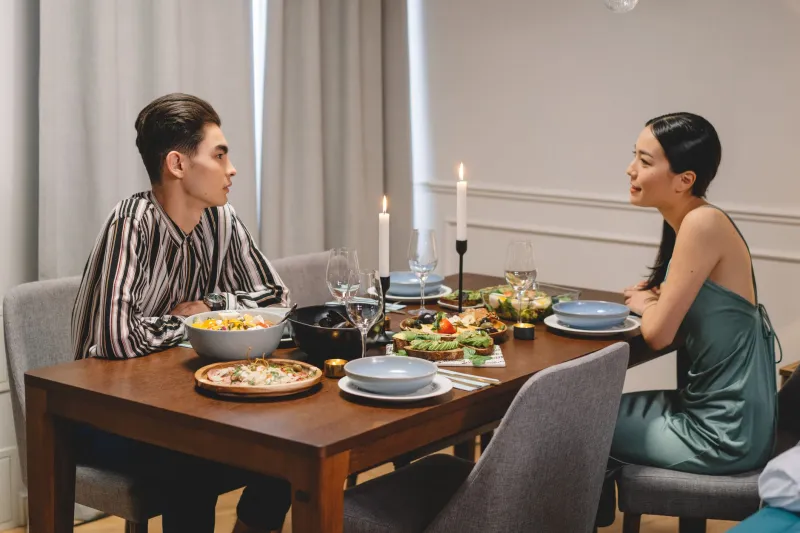
There is a peculiar paradox at the heart of many companionship encounters: the very defenses people erect to protect themselves are often the same walls that prevent them from experiencing what they came for in the first place. Polished small talk, rehearsed personas, and carefully curated impressions may feel safe, but they quietly foreclose the possibility of anything genuinely resonant taking place.
At EscortGirl, we believe that the most extraordinary companionship experiences are not built on performance — they are built on presence. And presence, in its truest form, requires a willingness to be seen.
Why We Armor Up — and What It Costs Us
Most adults in the United States have spent decades learning to manage their emotional exposure. Professional environments reward composure. Social media culture incentivizes curated self-presentation. Even close friendships can carry an unspoken code of emotional restraint. By the time many people seek out companionship, the habit of self-protection has become so automatic that they are barely aware it is operating.
This guardedness is entirely understandable. Vulnerability carries real risk in many contexts — the risk of judgment, rejection, or misunderstanding. But in a companionship setting, where discretion is a professional cornerstone and the encounter exists outside the ordinary social ledger, the calculus shifts considerably. The risks that typically justify emotional armor are largely absent. What remains, then, is an opportunity.
When a client enters an engagement still wearing that armor, the encounter tends to plateau at a comfortable but ultimately shallow level. Conversation stays pleasant. Time passes agreeably. But the deeper sense of connection — the kind that lingers in memory long after the evening ends — rarely materializes. The cost of self-protection, in this context, is the very experience one came to have.
The Psychology of Emotional Openness
Research in social psychology has long established that self-disclosure is one of the most powerful drivers of interpersonal closeness. When one person shares something genuine — a real opinion, a personal uncertainty, an honest feeling — it creates an implicit invitation for the other person to do the same. Psychologists refer to this as the reciprocity of disclosure, and it is one of the most reliable mechanisms through which strangers become, at least momentarily, something more.
In companionship encounters, this dynamic is particularly potent. A skilled, emotionally intelligent companion is attuned to these openings. When a client moves beyond the performative — when they express something real about their life, their inner world, or even their hesitations about the encounter itself — a perceptive companion can meet that honesty with her own, creating a loop of mutual authenticity that elevates the entire experience.
This is not about confessional oversharing or emotional unburdening in ways that place undue weight on the encounter. It is about something subtler: a willingness to be genuinely present rather than strategically composed.
Creating the Conditions for Genuine Connection
Vulnerability does not simply happen — it requires conditions. Both clients and companions play a role in cultivating an environment where emotional honesty feels possible and safe.
For clients, this begins with intention. Before an engagement, it is worth asking yourself: what do I actually want from this experience? Not the surface-level answer, but the honest one. Perhaps it is genuine laughter. Perhaps it is the feeling of being truly heard by another person. Perhaps it is simply the relief of dropping the professional mask you wear for the other sixteen hours of your day. Naming that desire privately — even if you never articulate it aloud during the encounter — has a way of orienting your behavior toward authenticity.
It also helps to resist the impulse to impress. Many clients unconsciously default to status signaling — discussing professional accomplishments, material acquisitions, or social connections. These are not inherently off-limits, but when they dominate the conversation, they tend to keep the encounter at arm's length. Genuine curiosity about your companion, expressed without agenda, is far more likely to open a real exchange.
For companions, the work involves creating what might be called a low-judgment atmosphere — a conversational environment in which the client feels that honesty will be received with warmth rather than evaluation. This is largely a matter of demeanor: the way questions are asked, the quality of listening offered, and the willingness to respond to a client's openness with something genuine in return rather than a reflexive professional deflection.
Vulnerability Is Not the Same as Oversharing
It bears emphasizing that emotional openness in companionship does not mean abandoning appropriate boundaries — for either party. There is an important distinction between being authentically present and using an encounter as a venue for emotional processing that would be better suited to a therapist or trusted friend.
Healthy vulnerability in this context looks like: expressing genuine enthusiasm or curiosity, sharing a real opinion rather than a diplomatic non-answer, acknowledging nervousness or unfamiliarity without self-deprecation, or simply allowing a moment of quiet comfort rather than filling every silence with chatter. These are small acts of honesty that cost very little but yield a great deal.
Oversharing, by contrast, tends to create imbalance — placing an emotional burden on the companion that falls outside the scope of the engagement and, paradoxically, often produces the opposite of intimacy. The goal is reciprocal presence, not emotional transaction.
The Encounters That Stay With You
Ask anyone who has experienced a truly memorable companionship encounter what made it exceptional, and the answers are rarely about surface-level attributes. They speak instead about feeling genuinely understood, about a conversation that surprised them with its depth, about laughter that felt unrehearsed, about a moment where the formality of the arrangement briefly dissolved into something that simply felt human.
Those moments do not happen by accident. They happen because someone — client, companion, or both — was willing to step out from behind the carefully maintained presentation and simply be present with another person.
That willingness is, in the end, what transforms a companionship engagement from a pleasant transaction into something genuinely worth remembering. It is not a technique to be mastered but a posture to be cultivated — one encounter at a time.
At EscortGirl, we are committed to helping both clients and companions understand what makes premium companionship truly premium. Often, the answer has less to do with external circumstances than with the internal willingness to show up, fully and honestly, to the moment at hand.